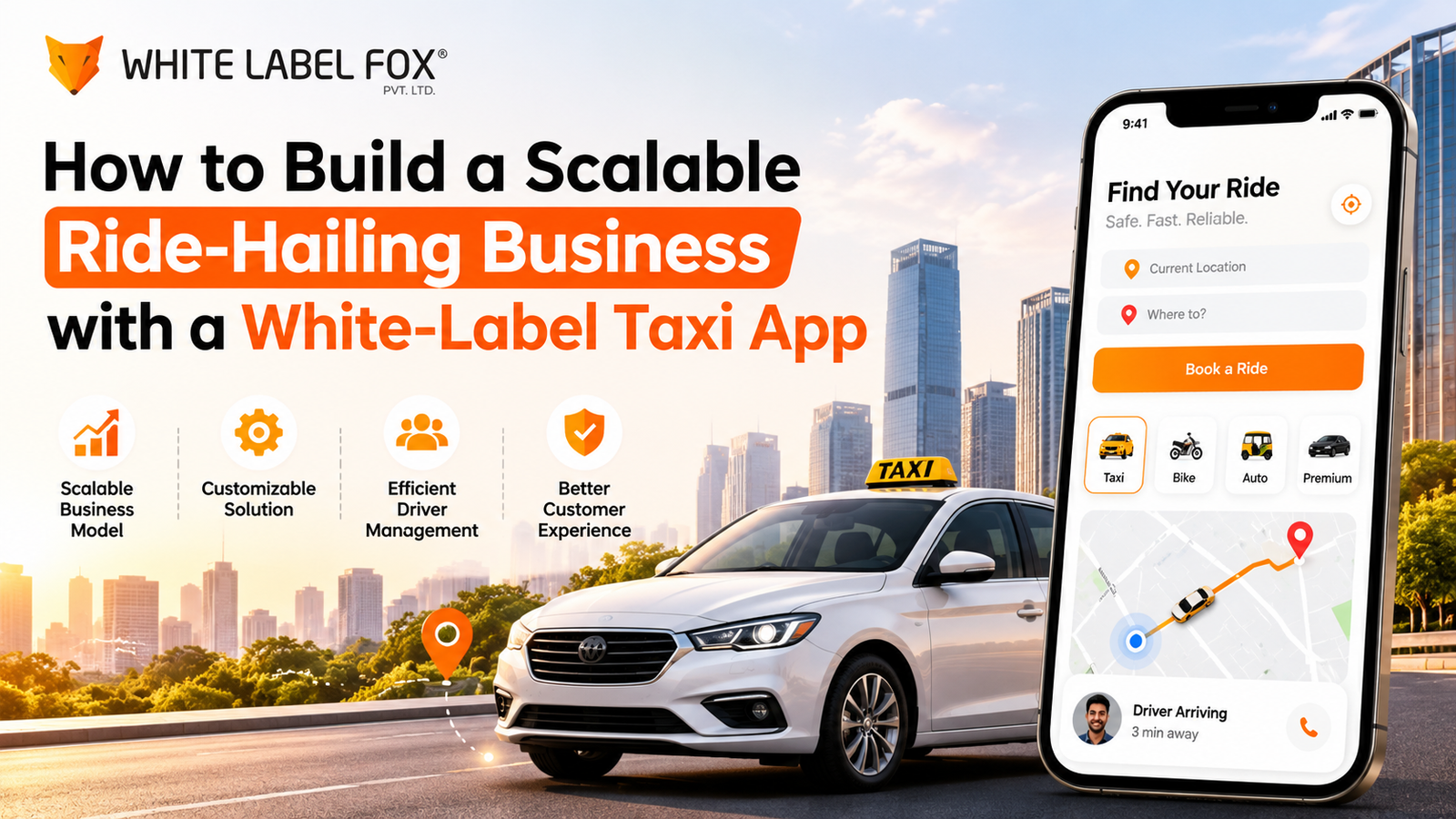
Not long ago, starting a ride-hailing business meant raising serious money, hiring a large engineering team and waiting the better part of a year before a single passenger could book a ride. That is no longer the only way in. Today, local taxi operators, fleet owners and first-time founders are launching with a white-label taxi app: a ready-built platform they can brand as their own and take to market in weeks.
But launching fast is only half the story. The real question is whether the business can keep growing after the first hundred rides. This guide walks through how to build a ride-hailing business that scales, from choosing the right platform to expanding into new cities.
Why Founders Are Choosing White-Label Over Custom Builds
A custom-built platform gives you total control, but it also brings unpredictable costs, long development cycles and a lot of technical risk before you have earned your first fare. A white-label taxi app works the other way round.
You start with a platform that has already been tested in real markets, then adjust the branding, pricing rules and features to suit your city.
That is why white-label taxi app has become an industry shorthand. It does not mean copying a brand. It means building on the same proven flow of request, match, track, pay and rate, then making it your own.
Faster Time to Market
Launch timelines are typically measured in weeks rather than months. In a market where a competitor can appear overnight with a discount code, that head start matters.
Predictable Costs
Instead of one large upfront build, most providers work on a setup fee plus ongoing support or a licence. You know your numbers before you commit, which makes budgeting and investor conversations far easier.
Lower Technical Risk
Payments, GPS tracking, driver matching and push notifications are the parts that break first in a homegrown app. With a mature white label Uber app, those pieces have already been through real traffic.

What a Scalable Uber Clone App Should Include
Not every Uber clone app is built to grow. Some handle fifty rides a day comfortably and fall over at five hundred. Whatever you choose, check that it covers these basics first.
The Core Modules You Cannot Skip
- Rider app: booking, live tracking, fare estimates, multiple payment options and ratings.
- Driver app: ride requests, in-app navigation, an earnings dashboard and document upload.
- Admin panel: driver verification, fare and commission settings, reports and dispute handling.
- Dispatch engine: the logic that matches the nearest suitable driver quickly, even at rush hour.
Features That Set You Apart
Once the basics work, these are the features that increasingly separate a serious white-label taxi app from a basic one:
- Smart dispatch and dynamic pricing: AI-assisted matching and surge rules that respond to real demand.
- Safety tools: an SOS button, trip sharing with family and proper driver ID checks.
- EV and green options: electric vehicle categories are one of the biggest ride-hailing trends right now, and riders are starting to look for them.
- Multi-language and multi-currency support: essential if you plan to expand across regions.
- Flexible payments: cards, wallets, local gateways and, where needed, cash.
Trends Shaping Ride-Hailing Right Now
A platform you launch today should still make sense two years from now. Three shifts are worth building around.
AI Working Behind the Scenes
Riders never see it, but AI-assisted dispatch, demand forecasting and ETA prediction quietly decide which operators feel fast and which feel unreliable. Shorter pickup times lead directly to fewer cancellations and better ratings.
Electric Fleets and Sustainability
Governments and corporate clients are pushing steadily toward greener transport. Offering an EV category, even with a handful of vehicles, helps you win corporate accounts and gives your brand a clear story to tell.
Local Operators Taking on the Giants
Big platforms dominate the headlines, but they often overlook smaller cities, niche segments and local pricing needs. A regional operator using a white-label taxi app can fill those gaps with local drivers, local support and fares that make sense for the area. That is where a lot of the real growth is happening.
Uber Clone Script vs. a Complete Platform: Know What You Are Buying
The term Uber Clone Script gets thrown around loosely. Strictly speaking, a script is the source code. A complete platform adds customisation, testing, launch support and ongoing maintenance. Both can work, but they suit different teams.
If you have an in-house tech team, a script gives you a base to build on. If you do not, Uber clone app development with a provider who handles setup, branding and launch is usually the smoother route. Before signing anything, ask these questions:
- Do I get the full source code, or only a hosted licence?
- How easily can I add new services, such as bike taxis or deliveries, later?
- What does the architecture look like when traffic grows ten times?
- How are updates, bug fixes and security patches handled?
- Is there real post-launch support, and what are the response times?
The answers will tell you more about scalability than any feature list.

Step-by-Step: Building Your Ride-Hailing Business
Here is a practical sequence that works for most new operators.
1. Start with a Niche and a Single City
Trying to be everywhere on day one is the quickest way to burn cash. Pick one city, or even one district, and decide who you are serving: airport transfers, corporate commuters, women-only rides or outstation travel. A focused niche makes marketing cheaper and driver retention easier.
2. Choose Your Technology Partner Carefully
Look beyond the demo. Ask for live apps running in the market, speak to existing clients if you can, and test the driver app as seriously as the rider app. Drivers leave quickly when an app is clumsy.
3. Brand It and Localise It
Add your logo, colours and app name, set local fare structures and taxes, and translate the interface where needed. Your Uber-like app should feel like a local brand, not a copy of someone else’s.
4. Onboard Drivers Before Riders
A rider who waits fifteen minutes for a cab rarely opens the app again. Build your driver base first, with fair commissions and quick payouts, so supply is ready when demand arrives.
5. Soft Launch, Measure and Improve
Go live in a small area. Track wait time, cancellation rate, ride completion rate and driver earnings. Fix what the numbers show before you spend heavily on advertising.
Scaling Beyond the First City
Build on Infrastructure That Grows
Cloud hosting, load balancing and a modular codebase let you handle spikes like festival nights, rainy evenings and airport rushes without a crash. Ask your provider how the platform behaves under load, and test it before you expand.
Add Services, Not Just Cities
Once your core taxi service is stable, new revenue streams are easier to add. Bike taxis, car rentals app, parcel delivery and scheduled corporate rides can all run on the same driver network and customer base. A modular white label Uber app makes this far cheaper than starting again.
Let Data Guide Your Decisions
Demand heat maps, driver utilisation and repeat-rider rates tell you where to add vehicles, when to run promotions and which areas to enter next. Operators who review these numbers weekly tend to grow more steadily than those who go on instinct.
Common Mistakes to Avoid
- Choosing on price alone: the cheapest package often hides limited support or locked code.
- Ignoring drivers: rider growth means little without enough reliable drivers.
- Skipping compliance: licences, insurance and data-protection rules vary by city, so check them before launch.
- Over-customising too early: launch with the essentials, then add features based on real feedback.
- Having no marketing plan: a good app does not promote itself. Budget for local partnerships, referral codes and driver campaigns.
Final Thoughts
Building a ride-hailing business no longer needs a giant budget or a year of development. A well-chosen white-label taxi app lets you launch quickly, keep costs predictable and focus on what actually wins markets: reliable service, happy drivers and smart local marketing. The platform gets you to the starting line. How you operate decides how far you go.
Whether you pick an Uber clone app as it comes or a more customised build, choose your technology partner as carefully as you would a business partner. Working with an experienced Clone App Development Company that offers flexible architecture, transparent pricing and real post-launch support can save you months of rework and give your business room to grow.
FAQs
1. What is a white-label taxi app and how is it different from a custom-built app?
A white-label taxi app is a ready-made ride-hailing platform that you rebrand with your own name, logo, colours and fare rules. A custom build starts from zero, so it takes longer and costs more. With a white label Uber app, the core features (booking, tracking, payments and dispatch) are already tested, so you can launch in weeks and spend your time on drivers and marketing.
2. Is an Uber clone app a good idea for a new taxi business?
For most startups and local operators, yes. An Uber clone app gives you the proven request, match, track and pay flow without the long development cycle. It works best when you focus on a specific city or niche and customize the app to your market. It is not a good fit if you need a completely unique product that doesn’t follow the standard ride-hailing model.
3. What is the difference between an Uber clone script and a full Uber clone?
An Uber clone script is the source code, a base your own developers build on. A complete Uber clone solution also includes customisation, branding, testing, launch support and ongoing maintenance. If you have a tech team, a script can work well. If you don’t, Uber clone app development with a provider who handles the setup is usually smoother.
4. How long does Uber clone app development take?
Timelines vary with how much you customize, but a ready-made platform can usually go live in a few weeks. Adding custom features, extra payment gateways or new service types (such as bike taxis or deliveries) will extend that. Starting with the essentials and adding features after launch is the quickest and lowest-risk approach.
5. Can an Uber-like app grow into multiple cities and services?
Yes, if the platform is built to scale. Look for cloud hosting, a modular codebase and support for multiple languages and currencies. A good Uber-like app can add services such as car rentals, parcel delivery or EV rides on the same driver network, so you can expand without rebuilding anything.